SPIRITUAL BLINDNESS
Luke 18:31-43
A sermon preached at Trinity Fellowship, Toccoa, GA, 10/1/95 and University Church, Athens, GA, 10/23/22.
Luke 18:31 And he took the twelve aside and said to them, “Behold, we are going up to Jerusalem, and all the things which are written though the prophets about the Son of Man will be accomplished. 32 For he will be delivered to the Gentiles, and will be mocked and mistreated and spit upon, 33 and after they have scourged him, they will kill him; and the third day he will rise again.” 34 And they understood none of these things, and his saying was hidden from them, and they did not comprehend the things that were said. 35 And it came about that as he was approaching Jericho, a certain blind man was sitting by the road begging. 36 Now hearing a multitude going by, he began to inquire what this might be. 37 And they told him that Jesus of Nazareth was passing by. 38 And he called out, saying, “Jesus, Son of David, have mercy on me!” 39 And those who led the way were sternly telling him to be quiet; but he kept crying out all the more, “Son of David, have mercy on me!” 40 And Jesus stopped and commanded that he be brought to him; and when he had come, he questioned him, 41 “What do you want me to do for you?” And he said, “Lord, I want to regain my sight.” 42 And Jesus said to him, “Receive your sight; your faith has made you well.” 43 And immediately he regained his sight, and began to follow him, glorifying God. And when all the people saw it, they gave praise to God.
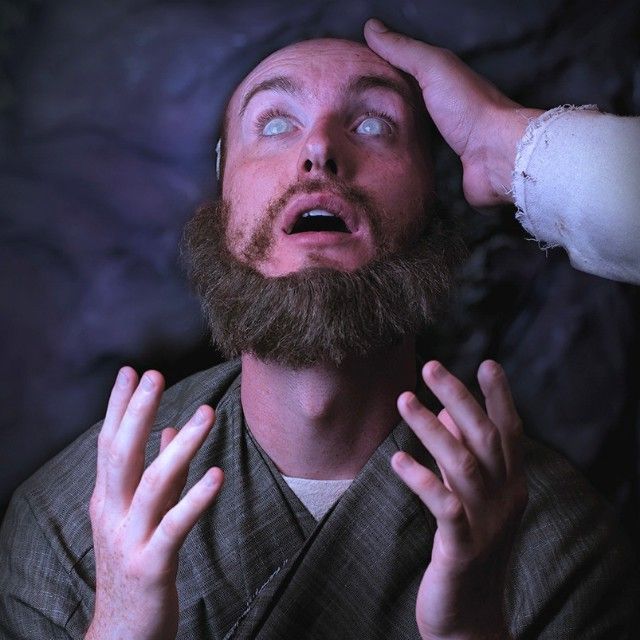
INTRODUCTION: Well, this is an interesting pairing of episodes. Luke doesn’t beat us over the head with it, but sometimes a Gospel writer can say a lot just by his choice of events to record and how he arranges them. Here, the healing of a blind man is pretty obviously . . . the healing of a blind man. But its placement calls attention to the fact that in verses 31-34 we are dealing with a different—and darker—kind of blindness.
If you are like me, you probably have to resist the temptation to feel superior to the disciples in the first part of our passage today. Jesus’ words about His upcoming suffering are not terribly obscure, even given that the disciples did not have the advantage of hindsight that we have in understanding them. “How could they have missed it?” we ask. We would not have missed it! Right. That is why I want to talk to you today about spiritual blindness and hardness of heart. I’m not going to talk about the meaning of Jesus’ words, for I think that in our post-Resurrection and post-Pentecost hindsight they are clear enough. Their significance cannot be stressed too much, but I have spoken about that on multiple occasions. So today I am going to focus on the spiritual blindness and hardness of heart that lay behind the disciples’ lack of comprehension of them. For it was a much more serious problem than the physical blindness of poor Bartimaeus in the episode which follows. (We know his name from Mark’s account.) So we will look at spiritual blindness—its nature, its seriousness, its difficulty, and, by God’s grace, maybe even its cure.
I. SPIRITUAL BLINDESS: WHAT IT IS
What is spiritual blindness? Perhaps the easiest way to explain what spiritual blindness and hardness of heart are, is to start by giving some examples. Here are some statements I hear all the time doing church work, trying to share the Gospel. I bet you have heard some of them too.
“Well, I’m just not very religious.” Ah, I reply, but I am not talking about religion—I’m talking about truth. This often produces either a blank stare, or else even hostility; it’s hard to get past either one. “Oh, I am a Baptist (or Methodist or Presbyterian—insert denomination of your choice).” Ah, I reply, that’s very nice, but what about your relationship with the Lord? More blank stares or else hostility. “I’m spiritual but not religious.” Now it’s my turn to give the blank stare, though hopefully not the hostility. It’s better to have the presence of mind to say, “That is very interesting. What do you mean by those terms?” Bottom line: It is awfully hard to connect with people on spiritual things—harder, we often feel, than the mere difficulty of the concepts involved could ever possibly explain. Surely something else is at work: spiritual blindness and hardness of heart.
But wait: You encounter the same phenomenon when dealing with believers on certain subjects, too. What about the spirit which tolerates a lack of theological integrity in the church? “Oh, I feel led to stay in and be a witness where I am.” What kind of witness? Talking to a sinner from inside a church that preaches liberal theology, that does not believe the Bible, that does not take seriously the problem of original sin and nothing less than the blood of Christ as its only cure, is like trying to reform a drunk by taking him to a bar and buying him a gin and tonic! Why is this so hard for some people to see? Or what about the multitude who watch Charles Stanley or some other media preacher on TV on Sunday morning but have no relationship to an actual local congregation? Do their Bibles somehow not contain Hebrews 10:25, which commands us not to forsake the assembling of ourselves together? Somehow they can read right past that verse (I have watched some of them do it right in front of my eyes!) without ever being struck by the strange outlandish notion that it might apply to them. It goes right over their heads, or maybe around their heads, or perhaps more accurately through their heads without leaving behind any evidence of its passage. They see the words, but somehow they do not register. If you point them out so that they are prevented from ignoring them, however kindly, you are right back to the blank stare or hostility.
Oh, but we are just getting started. How many times have you heard someone say, in effect, “I am going to get serious about the Christian life—Bible reading and prayer—faithful church attendance—tithing—witnessing (insert practice of your choice)—tomorrow. I really will. But, you see, things are just a little hectic right now.” Right now? I know people who have been saying this for years! Yet they seem blissfully ignorant of how hollow it sounds or of how little likelihood there is that “things” will be any less “hectic” tomorrow than they are today, so that they could achieve their laudable spiritual goals without the trouble of prioritizing and making sacrifices. What about the man who consistently works eighty plus hours a week and tells you that what matters is not quantity but quality time with his family! Right. As if he is not too exhausted for there to be any “quality” if and when he does get home. Or how about people who routinely turn on the television to be entertained by adultery and blasphemy? I am not saying we should never hear or read or watch stories involving those topics. Then we would have to stop reading the Bible! But instead of being driven to our knees by such content, we laugh at it! And our faces are mighty pious when we come to church on Sunday morning. “And they understood none of these things, and his saying was hidden from them, and they did not comprehend the things that were said.”
Ouch! If I haven’t stepped on your toes, it is probably only because I did not go on multiplying my examples long enough. So be grateful that it is high time to move on from examples to a definition. Spiritual blindness is the inability to receive spiritual things which Paul described in 1 Cor 2:14. “The natural man does not receive the things of the Spirit of God, neither can he know them, for they are spiritually discerned.” This inability is total in the unbeliever until the Holy Spirit converts his heart. It remains partially present in the more or less carnal believer, hindering and thwarting the ongoing work of God in his life. It is progressively relieved by the process of sanctification, of growth in grace, but it will never be completely absent from our lives until we see Christ face to face. It has nothing to do with intellectual limitations or stupidity. It affects brilliant minds just as much as slow ones. It is a spiritual dullness, a spiritual denseness, an ability to hear the truth without dealing with it or being dealt with by it, which ultimately stems from our fallen and rebellious natures, encouraged by the Enemy of our souls. It is something that each one of us wrestles with at one point or another. And it was certainly operative in the disciples before the Resurrection, as we see in the passage that is before us today. It may not be at the same point for us as it was for them, but at some point we are each as capable of this blindness as they were.
II. THE SERIOUSNESS OF SPIRITUAL BLINDNESS
Second question: How serious is spiritual blindness? It is interesting that Luke pairs this story with the healing of blind Bartimaeus. The comparison with physical blindness helps us understand the seriousness of the disability we are dealing with here. It raises the question of which of the two is the greater problem. How can we get a handle on the answer?
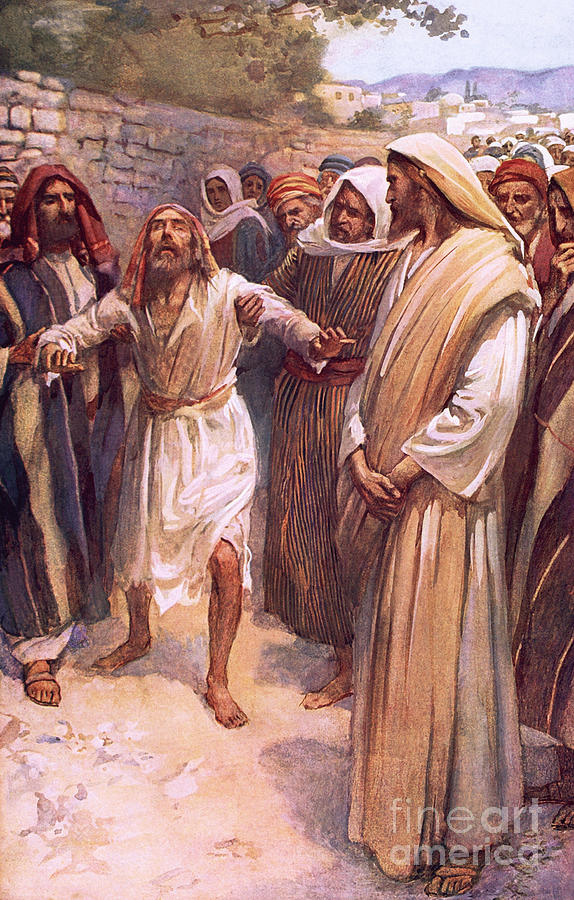
Students in the university system of Georgia used to have to pass a test to enter their junior year, a test I used to get to grade. Do they still take the Regents Test, the Rising Junior Exam? One of the essay questions they used to have to choose from was, “Which of your five physical senses—sight, hearing, touch, smell, taste—would you least like to lose?” Well, there were a few gluttons who wrote on taste, and a handful of musicians who picked hearing, but ninety percent of the respondents and more always chose sight. I understand. Hearing is a close second, but I think I would pick sight too. I remember when I got my first pair of glasses after a couple of years of progressively finding the chalkboard in school harder to read. I was in the seventh grade. I could not stop taking them off and putting them back on, fascinated by the contrast and appalled by how much I had been missing. How had Miss Mims acquired all those wrinkles all of a sudden? I had also not adequately appreciated how her eyes lit up when a student got something right. That made even the wrinkles beautiful.
OK, if physical sight is valuable to us, how much more should spiritual vision be? It would be a great tragedy to miss the light of this world, but how much greater to miss the Light of which our sun is only a symbol! It would be a great tragedy to miss so much earthly beauty, but how much greater to miss the beauty of holiness, the beauty of the glory of God in the face of Jesus Christ, the beauty of heavenly and eternal life! Nothing could be more serious. Spiritual blindness is a terrible thing: It can cost you God’s blessing in this life and Heaven in the next.
III. THE DIFFICULTY OF CURING SPIRITUAL BLINDNESS
Our third point, flowing from its seriousness, is the difficulty of curing spiritual blindness. It is curious, as I have noted, that Luke leads us right into the story of the healing of blind Bartimaeus. I do not know whether he did it on purpose or not (I strongly suspect he did), but the juxtaposition of these two stories certainly helps bring out the difficulty of curing spiritual blindness. How? Look at the contrast between the results. One type of blindness got cured—the one you might think was more difficult—and the other did not. At least, not yet.
Physical blindness is much easier to cure than spiritual blindness—even for the Lord Jesus Christ Himself! All it took was one simple request from Bartimaeus, and his physical sight was restored. But the disciples were constantly asking, “Teach us to pray—explain this parable—show us the Father.” Give them credit for trying. Yet still they did not see. It took one word from Jesus to cure Bartimaeus’s physical blindness. All the eloquence of the eternal Word, every discourse, every parable and hard-hitting illustration of the Son of Man, every plain and blunt statement such as we read today from the greatest Teacher who ever lived, were not sufficient for the disciples’ spiritual blindness. One moment was enough to remove the scales from Bartimaeus’s physical eyes. Three years day and night had not yet sufficed for the disciples. If I can say it without heresy, if I can utter it without blasphemy, the one thing that seems difficult even for an omnipotent God is to remove the cataracts of spiritual blindness from the hearts of men. Don’t get me wrong—Omnipotence is sufficient for this task. But every bit of that omnipotence and nothing less is what it takes!
IV. THE CURE FOR SPIRITUAL BLINDNESS
Fourth, what is the cure for spiritual blindness and hardness of heart? I wish I knew! (Actually, I do. It would be more accurate to say I wish I knew an easier answer.) Not all the Bible reading in the world, in and of itself, will do it. Not all the good expository preaching in the world, in and of itself, will do it. Ultimately, without neglecting those necessary means, we must wait on the mysterious illuminating and convicting work of the Holy Spirit. That is what took the disciples from Luke 18:34 to Luke 24:45—from “And they understood none of these things, and his saying was hidden from them, and they did not comprehend the things that were said,” to “Then [Jesus] opened their minds to understand the Scriptures.”
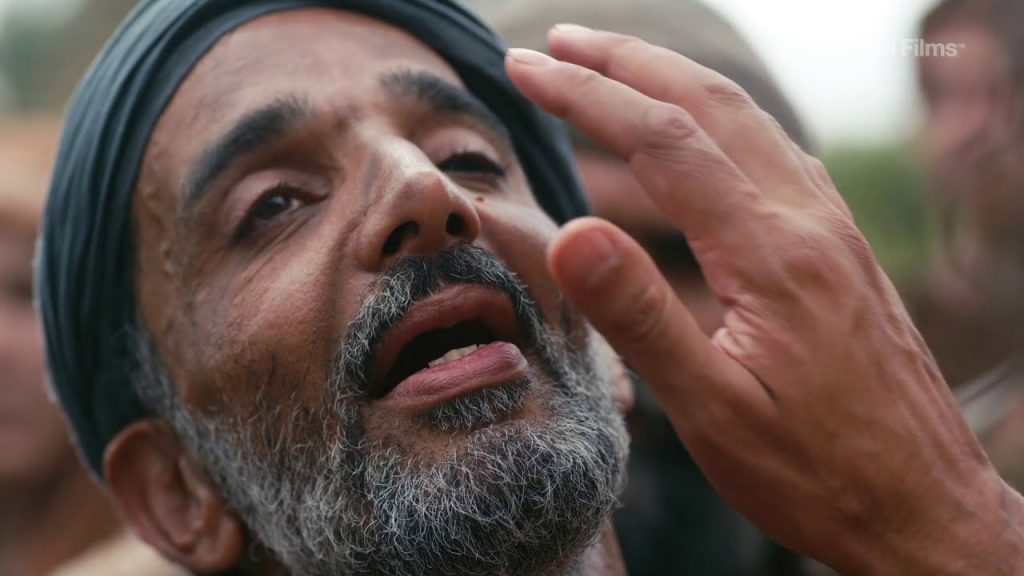
Then He opened their minds to understand the Scriptures! Oh, is that not where we too want to be? So let us push on one step farther. What was it that unleashed the power of the Holy Spirit in the disciples’ lives so they could complete that journey? It was the Cross! It was the death, burial, and resurrection of Christ which brought home to them in an inescapably personal way the spiritual truths they could not yet see. And so, if we truly want the Spirit to do His work of enlightening our eyes to the truths of Scripture and how they apply to us, perhaps we should seek Him for that ministry at the place where the disciples found it: at the foot of the Cross.
Truly, the Cross is the place where we have the most hope of receiving this cure. How did that work in the disciples’ case? The death of Christ for these disciples was the death of all their hopes, all their dreams, their whole life’s work. And as such, it was also the death of all their safe assumptions and all their preconceived notions. The death of Christ was also, perhaps most significantly, the death of all their pride. It was the death and crucifixion of any pretense that they were anything but a bunch of clueless cowards, useless deserters, and fickle traitors. The death of Christ was then inescapably to them that death to self which makes possible the resurrection of faith, understanding, and responsiveness to the Word of God. Only after that death were the disciples ready—only then could they be ready—to accept a suffering Messiah and salvation by grace, God’s unmerited favor, alone. If we want to receive the same gift of sight, then we too must stand at the foot of the Cross and receive by faith that death. That is the place—the only place—where the Spirit’s ministry of illumination, which is the only answer to the problem of spiritual blindness, can be found.
CONCLUSION: For all of us, as for the original disciples, the only cure for spiritual blindness is to be driven to our knees at the foot of the Cross. And so I plead with you this morning: go there first, on your own, before God has to drive you! Would you pray this prayer with me? If God gives you the ability to pray it and truly mean it, and to keep praying it and meaning it as a regular part of your devotions, I think it could take us an important step at least in that direction.
“Father, I do not know where my blind spots are—if I did, they wouldn’t be blind spots—but I am willing to admit that I must have some. I ask you to drive the sharp, two-edged sword of your Word through where it needs to penetrate. I am willing and ready to suffer whatever death to self is necessary to make this penetration possible. And I am ready and willing to make whatever changes may be necessary in response—for your Son said, ‘He who is willing to do His will is he who will know the doctrine, whether it be of God’ (John 7:17). Make us willing for the sake of your Son, and for His glory.”
Amen.
Here endeth the Lesson.
Donald T. Williams, PhD, is Professor Emeritus of Toccoa Falls College, an ordained minister in the Evangelical Free Church of America, a past president of the International Society of Christian Apologetics, and a member of University Church, Athens, Ga. He is the author of thirteen books, including The Young Christian’s Survival Guide: Common Questions Young Christians are Asked about God, the Bible, and the Christian Life (Christian Publications, 2019) and Ninety-Five Theses for a New Reformation: A Road Map for Post-Evangelical Christianity (Semper Reformanda Publications, 2021). His website is www.donaldtwilliams.com. He blogs at www.thefivepilgrims.com.
Related