JESUS ON PRAYER,
Luke 11:1-13
A sermon preached at Trinity Fellowship, Toccoa, GA, 4/9/95, and at University Church, Athens, GA, 11/8/2020
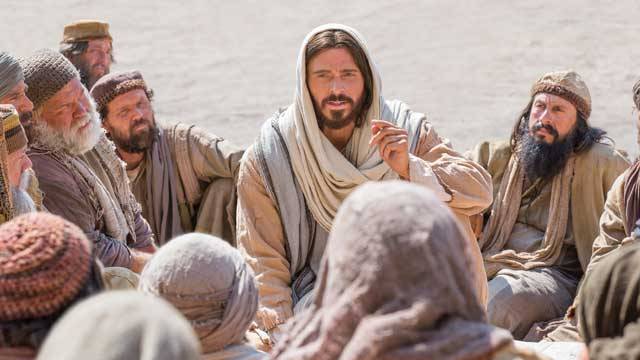
Luke 11:1 And it came about that while he was praying in a certain place, after he had finished, one of his disciples said to him, “Lord, teach us to pray, just as John also taught his disciples.” 2 And he said to them, “When you pray, say: Father, hallowed by thy name. Thy kingdom come. 3 Give us each day our daily bread. 4 And forgive us our sins, for we ourselves also forgive everyone who is indebted to us. And lead us not into temptation.” 5 And he said to them, “Suppose one of you shall have a friend and shall go to him at midnight and say to him, ‘Friend, lend me three loaves, 6 for a friend of mine has come to me on a journey and I have nothing to set before him.’ 7 And from the inside he shall answer and say, ‘Do not bother me. The door has already been shut and my children and I are in bed; I cannot get up and give you anything.’ 8 I tell you, even though he will not get up and give him anything because he is his friend, yet because of his persistence he will get up and give him as much as he needs. 9 And I say to you, ask, and it shall be given to you; seek, and ye shall find; knock, and it shall be opened to you. 10 For everyone who asks receives, and he who seeks finds, and to him who knocks it shall be opened. 11 Now suppose one of you fathers is asked by his son for a fish. He will not give him a snake instead of a fish, will he? 12 Or if he is asked for an egg, he will not give him a scorpion, will he? 13 If you, then, being evil, know how to give good gifts to your children, how much more will your heavenly Father give the Holy Spirit to those who ask him?”
INTRODUCTION: There is probably nothing in the Christian life that is more advocated and less attempted, more urged and less understood, more recommended and less resorted to, or more praised and less practiced than prayer. That this should be so is a serious danger sign in the spiritual life. But one more exhortation—“You ought not to be so carnal; you ought to pray more”—probably would not do much good. Part of the reason for that is that many sincere Christians simply have not found prayer to be the meaningful experience it is cracked up to be. We assume meaningful prayer should come naturally, like talking to a friend, and we get frustrated and discouraged when it does not. But think about the differences between prayer and human conversation. In a conversation with a friend I get immediate feedback. Through words, tone of voice, facial expression, and body language I have objective evidence of how my friend feels about what I have said—or whether he is even listening. With the invisible God there is none of that. To believe that prayer is more than a monologue requires a constant exercise of faith. Prayer starts sounding an awful lot like work. And what do you say to the High King of the universe? It is little wonder that we can end up feeling tongue-tied.
In short, we need instruction in prayer. If you feel that frustration, if you feel that need, then rejoice, and be of good cheer! For the disciples felt the same way. And so they asked, “Lord, teach us to pray.” And more importantly, Jesus approved of their request. It seems it may have been their most intelligent question in the whole three years! For if you have been following these studies in the Gospel of Luke, you should realize by now how radically unusual the Lord’s response was. He did not answer their question with a question. He did not say, “Well, let me tell you a story.” For once, he gave a plain, simple, and straightforward answer. He approved of that request. And if it is your request today, he approves of yours too.
The answer Jesus gave is a condensation of the model prayer that we find in its full form in Matthew’s account of the Sermon on the Mount. I have expounded that passage elsewhere (Donald T. Williams, The Disciple’s Prayer, Camp Hill, PA: Christian Publications, 1999; reprinted, Eugene, OR: Wipf & Stock, 2005). But I don’t want to just repeat what I said there today. Today we want to see how Luke’s condensation of that more familiar material focuses our thoughts. It leads us to the following thesis: Effective prayer is rooted in an understanding of who God is. Let me repeat that: Effective prayer is rooted in an understanding of who God is; that is, it is rooted in theology. Two of God’s attributes are especially brought into focus in Jesus’ response here: His sovereignty and His goodness.
I. GOD’S SOVEREIGNTY
First, Jesus’ model prayer begins with a focus, not on ourselves and our needs, but on God, both as Father and as King. In other words, it is focused specifically on His Person and on His sovereignty. “When you pray, say: Father [the Person], hallowed by thy name. Thy kingdom come” [the sovereignty]. Hallowed by thy name? That pulls the two ideas together. “Hallowed” is an old-fashioned word for consecrate, sanctify, or make holy. God’s name, in other words, is to be treated as holy. He is to be treated with all respect, reverence, and godly fear. Good praying then starts where Solomon says wisdom starts: with the fear of the Lord. Effective prayer is prayer that treats God as God.
Then God’s sovereignty comes into even clearer focus in that His kingdom is to be sought above all else. “Thy kingdom come” is a Greek idiom, an expression for “May you reign; may you exercise your sovereignty, in heaven and on earth, in the world and in my own life.” The longer version in Matthew uses Old Testament Hebrew poetic parallelism to “rhyme” a similar idea: Thy kingdom come; Thy will be done. Good praying then is praying that is concerned first of all not with ourselves and our needs, but with God. It starts with a concern for God’s name [Person] and continues with a concern for His agenda [sovereignty]. Effective prayer is prayer that is focused on the will of God.
What does this mean practically for the way prayer is supposed to function in our spiritual life? Obviously, for one thing, one cannot really pray at all until one has accepted Christ as Savior and as Lord. What we call “The Sinner’s Prayer” is often presented as the only exception to this principle, but that is not really an accurate way to understand it. Rather, “God, be merciful to me, a sinner” is simply and logically the first thing one says after one has accepted Christ as Lord and Savior, or as one is accepting Him as such. How so? As a sinner is the only way we can come to Him, and as Lord is the only Him we can come to. It is because Christ is Lord that His death puts Him in a position to be able to do something about our sins. It is what gives Him the authority to pardon them. So His sovereignty is entailed in His saviorhood. The model prayer begins the way it does to remind us of this fact. When we follow Christ’s instructions for prayer, then, we begin by orienting ourselves properly to the God who is the Father of our Lord and Savior Jesus Christ, and to the Christ who is both Lord and Savior. This means that orienting ourselves to Christ’s Saviorhood means precisely orienting ourselves to His sovereignty so that our prayers are focused on the holiness of His name and performance of His will.
If effective prayer is focused on the will of God, then it becomes a powerful re-shaper of our priorities. (Remember how Martha’s had gotten out of whack last week?) And as that happens, it becomes a powerful promoter of our peace. By following the Lord’s outline, we train ourselves in prayer to concern ourselves with the honor due to God’s name and the allegiance due to His rule and kingdom before we finally concern ourselves with our own felt needs—though such is His grace that we are indeed encouraged to bring in those needs in their proper place. In other words, every time we pray this way we are reminded to “Seek first the kingdom of God and His righteousness” so that ” all these things may be added to us” (Mat. 6:33). That means that every time we pray in accordance with the Lord’s instructions we are reminded not to be anxious about what we shall eat or drink or what we shall put on, for our heavenly Father knows that we need such things, and if He feeds the birds of the air and clothes the lilies of the field, will He not also take care of us, despite our little faith? Do you need to be reminded of such things as I do? Then make it a practice to pray as the Lord has taught us—not by reciting the model prayer as a formula (though there is nothing wrong with reciting it), but by using it as an outline. We take each petition and make it personal and specific in accordance with our needs and our situation. The path to peace then is not to focus on your needs, but on the sovereign God who is able to meet them. Effective prayer is focused on the will of God as the expression of the sovereignty of God.
Effective prayer is not only focused on the will of God; it is submissive to the will of God. Submission flows inevitably from the focus; without it, we would be rebellious, which is hardly an attitude conducive to prayer! In this as in everything, Christ Himself is our great example. “Nevertheless, not my will but thine be done” (Mat. 26:39). Practically, this means that we are prepared to accept a possible “No” or “Wait” or “Yes, but not the way you are thinking” as God’s sovereign answer to our prayers. If you really stop and think about it in the light of our own shortsightedness, we really want it to work that way! Woe to the person who gets everything he thinks he wants.
This focus on God’s will also explains the apparent “blank checks” that Scripture sometimes seems to promise us: If we ask in faith, we will get whatever we ask for. (Verses 8-9 imply that kind of thing here.) This is a rather strange promise, when even Jesus himself had to say, “not my will but thine be done.” But, of course, these are prayers of faith, and faith involves bowing to God’s will, coming to want what He does. Prayer that is truly submissive to the will of God will always get what it really wants, though not necessarily what it thought it wanted. Finally, this perspective drives us to the Scriptures. If effective prayer is focused on the will of God, where is that will revealed? Effective prayer flows from a heart that reads the Bible not just for information but to know and do the will of God; to know the will of God so we can pray in accordance with it.
In summary, until the purposes of God are more important to us than our petitions, until the demands of discipleship are more important to us than our desires, until the Law of God is more important to us than our lusts, until the will of God is more important to us than our wishes, we have not really begun to pray. And part of the purpose of prayer is to be gradually and continually helping us to get to that place.
II. HIS GOODNESS
The first attribute of God brought out by Jesus’ instruction in prayer is His sovereignty; the second is His goodness. If we believe that God is sovereign and therefore able to answer prayers that are in accordance with His will, and yet we do not pray, it must be because we fear what that will might be! We wouldn’t like to admit it, but it is true. Therefore, in the parables that follow the prayer, Jesus emphasizes the goodness of God as an encouragement to prayer.
First, we see His readiness to hear us in the story of The Friend at Midnight (vs. 5-8). “Suppose one of you shall have a friend and shall go to him at midnight and say to him, ‘Friend, lend me three loaves, for a friend of mine has come to me on a journey and I have nothing to set before him.’ And from the inside he shall answer and say, ‘Do not bother me. The door has already been shut and my children and I are in bed; I cannot get up and give you anything.’ I tell you, even though he will not get up and give him anything because he is his friend, yet because of his persistence he will get up and give him as much as he needs.”
Now, it seems to me that this parable is often misapplied. Its point is not that we should be persistent and nag God, as if God were like the lazy friend. The point is the contrast between God and the friend. If even a sorry friend like the one in the story would give you what you need, how much more will our Father? God is good, full of mercy and compassion, and He wants to give you what you really need just like you do your own children. You don’t have to bang on the door to rouse Him; you don’t have to beg and plead and nag and whine and wheedle. His ear is already turned toward us. We just have to ask. How do we get to the place where we really just have to ask? Effective prayer is focused on God’s name and His will, and it is founded on faith in His goodness.
First, we see The Father’s readiness to hear us in the story of The Friend at Midnight. Second, we see His benevolent kindness toward us in the Father’s good gifts (vs. 11-13). “Now suppose one of you fathers is asked by his son for a fish. He will not give him a snake instead of a fish, will he? Or if he is asked for an egg, he will not give him a scorpion, will he?If you, then, being evil, know how to give good gifts to your children, how much more will your heavenly Father give the Holy Spirit to those who ask him?” What kind of Father do we think God is? Well, we would never say He is going to give us a snake or a scorpion, but we often act—and pray—as if we thought exactly that. To improve our prayer lives then, we can do no better than to take our regularly scheduled prayer time (you do have one, don’t you?) as an opportunity to meditate on God’s sovereignty and His goodness.
Why don’t we earnestly pray “thy will be done” in our lives, even when we understand that this is the foundation for all effective prayer? It is because we are afraid of what it might cost us. We might have to go to the mission field, we might have to give up our money or our time, we might have to forgive an enemy or love the unlovely. Well, yes, we might. Oh, horrors! But the truth is that God only asks us to do any of those things because He knows they are the best thing for us to do. Yet we treat Him as if we thought He were a Father who would give us a snake instead of a fish or a scorpion instead of an egg. How ludicrous!
God is good. He is not an ogre. How do we know He is good? Because He sent Jesus! Because Jesus is His Son! Because Jesus is the express image of His nature! Because, as Paul put it, “God commendeth His love it us in this, that Christ died for us” (Rom. 5:8). Because, as Paul put it again, if God did not spare His only Son, but delivered Him up for us, how shall He not also with Him freely give us all things (Rom. 8:32)? That is why we can believe and know that He is our loving Father who longs to give us the very best gift of all: the Holy Spirit (vs. 13). In other words, He longs to give us all the benefits and all the blessings of salvation in Christ Jesus! In prayer as in every part of the Christian life, the key to all is faith. Do we trust Him? Are we willing to trust Him? Apart from faith it is impossible to please Him. With it, we experience Him as our loving Father, who will give us a fish or an egg, not a snake or a scorpion. Effective prayer is focused on God’s name and His will, and it is founded on faith in His goodness.
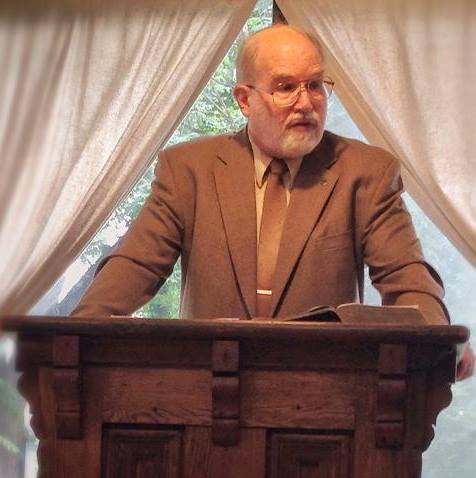 The Author, trying to preach what he practices
CONCLUSION: Effective prayer then is like an arch with two foundations: the sovereignty of God and the goodness of God. In meaningful prayer, these two columns grow together into a gothic arch pointing to heaven. Effective prayer is focused on God’s name and His will, and it is founded on faith in His goodness. So meditate on these truths, as they come to us in the principles Paul expounded and the stories Jesus told, until you are saturated with them. And from them in your heart will flow effective and fervent and meaningful worship, praise, adoration, confession, intercession—and yes, petition too—until God becomes to you in your experience all that the Bible says He is in reality: your heavenly Father.
NOTE: For further teaching on the theology and practice of prayer, see my book The Disciple’s Prayer.
Here endeth the Lesson.
Looking for the perfect CHRISTMAS PRESENT for that friend or family member who is serious about living the Christian life? Have we got an idea for you! Donald T. Williams, THE DISCIPLE’S PRAYER (Christian Publications, 1996; Reprint, Wipf and Stock). Williams thinks that we call “The Lord’s Prayer” was not intended just for recitation, but as a guide to a truly spiritual prayer life. He uses it as an outline and guides us in understanding the meaning of each petition and in the practice of making it personal and specific in terms of our own situation. In the Disciple’s Prayer, Jesus Himself gives us a full and practical biblical theology of prayer!
Order here:
Related