A good book review can perform three services. First, it alerts us to what might be worth our time amongst books coming out now, with description, critique, and evaluation. Second, it lets us comment on issues the book deals with whose significance is ongoing apart from the book itself. Finally, it can have a second life as a signpost to classic works from the past that we might have missed or of which we need to be reminded.
Therefore, I’m going to resurrect some of my old reviews that I think fulfill all these functions. I hope you will be reintroduced to some old friends or helped to find a new one.
Rod Dreher, The Benedict Option: A Strategy for Christians in a Post-Christian Nation. NY: Sentinel, 2017. xix + 278 pp., pb., $17.00.
Rod Dreher, Live Not by Lies: A Manual for Christian Dissidents. NY: Sentinel, 2020. xvi + 240 pp., hb., $27.00
Few books have provoked a bigger kerfluffle amongst conservative Christians than Rod Dreher’s twin manifestoes The Benedict Option and Live Not by Lies. Each book presents a reality check and a wake-up call. Each describes a distressing new situation without blinking and then offers a bold response to it. If the situations that confront us are real, the responses have to be thought through very carefully. And because the situations are undeniably real, it follows that if we don’t like the responses Dreher recommends, the onus is on us to come up with something better.
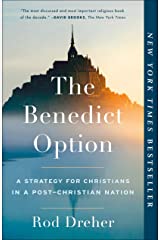
The Benedict Option deals with the fact that the culture war is over and conservative Christians lost—badly. There is now no doubt that we live in a post-Christian world that will be increasingly hostile to Christian faith and expression, especially its traditional sexual ethic. Being quiescent will not be sufficient protection; active approval and affirmation of LGBQT lifestyles (for example) is already becoming required by various companies and professions as the price of having a career. Christians must be prepared to endure forms of persecution that until recently would have been inconceivable in the West. They must respond by forming strong faith-building communities, modeled on medieval monasticism (hence the “Benedict option,” from Benedict of Nursia, founder of the Benedictine order and author of The Rule of St. Benedict), that will offer the moral and practical support required for survival as faithful believers in this brave new world.
Live Not by Lies brings a particular aspect of this new world into sharper focus: the “soft totalitarianism” that is already fast becoming its modus operandi. Rather than having ideology imposed from the top down by an oppressive government, as in the “hard totalitarianism” of the old soviet-style dictatorships, the new soft totalitarianism arises from below through pervasive “wokeness” in media, social media, entertainment, academia, and corporations. It is easy to ignore because the state is not sending anyone to the Gulag. But the result is that “dissenters from the woke party line find their businesses, careers, and reputations destroyed. They are pushed out of the public square, stigmatized, canceled, and demonized as racists, sexists, homophobes, and the like. And they are afraid to resist, because they are confident that no one will join them or defend them” (p. 9). Our only defense against this threat is to become aware of it, to resolutely reject the lies on which it is built, steadfastly refuse to participate in those lies even through silence, and become willing to suffer for the truth, supported again by those small faith communities in which we had better be deeply rooted. Both books abound with testimony from survivors of the hard totalitarianism of Nazi Germany or soviet Communism, warning that the West is sliding toward the loss of its cherished freedoms and affirming from their own experience the necessity of committed faith communities if one is to come through these challenges with one’s faith and integrity intact.
The great virtue of these books is their unflinching willingness to face the emerging realities of the post-Christian world. The naivety of those who think that electing a few better people to public office in the next election cycle is going to solve any of our problems becomes unavoidable in the light of the massive testimony Dreher brings to bear of people who can look at the West from the outside and, aided by experience, see the parallels between its current developments and their own history of suppression. Also, his stress on the importance of our churches (and smaller fellowship groups within them) becoming real communities of faith rather than just dispensers of religious consumerism is greatly needed and well taken.
 Rod Dreher
Unfortunately, it was at the point of implementation that I found the books at their weakest. The closer you get to how we can actually pull off the proposed solutions, the more nebulous the discussion felt. You cannot literally form monasteries if you are going to preserve family units (which Dreher rightly recognizes as also essential to any response that will preserve the faith into the future). As an Eastern Orthodox believer, Dreher may be a little too uncritical of monasticism as a movement. And I already knew that it was important for our churches to become real communities of faith. After reading Dreher I sense even more the urgency of traveling this path, but don’t know very much more about how to get there than I did before. With soft totalitarianism growing around us, I agreed that “Christians should educate themselves about the mechanics of running underground cells and networks while they are still free to do so” (Lies, p. 181). Unfortunately, I could not find the chapter detailing what those mechanics are in the book.
So there is more work to do. Perhaps it is churlish to complain that Dreher did not do all of it already. What he has given us was greatly needed and should be greatly heeded. In truth, I found the books to be better than some of their readers. I was given the impression before reading them that Dreher wanted us to withdraw from the secular culture and stop wasting our time trying to engage it. He is not guilty of that false dilemma at all. He wants us to create safe enclaves of faith for the purpose of continuing to engage the secular world with integrity. That many people get from his writing what they want to hear rather than what it actually says is one more bit of evidence that we need to listen to him and listen well.
Donald T. Williams, PhD, is Professor Emeritus of Toccoa Falls College in the hills of NE Georgia. A border dweller, he stays permanently camped out on the borders between literature and theology, serious scholarship and pastoral ministry, Narnia and Middle-Earth. An Inklings scholar and Christian apologist, he is the author of thirteen books, including Deeper Magic: The Theology behind the Writings of C. S. Lewis (Square Halo Books, 2015), An Encouraging Thought: The Christian Worldview in the Writings of J. R. R. Tolkien (Christian Publishing House, 2018), The Young Christian’s Survival Guide: Common Questions Young Christians are Asked about God, the Bible, and the Christian Faith Answered (Christian Publishing House, 2019), Stars through the Clouds: The Collected Poetry of Donald T. Williams, 2nd ed. (Lantern Hollow Press, 2020), and Ninety-Five Theses for a New Reformation: A Road Map for Post-Evangelical Christianity (Semper Reformanda Publications, 2021).
For a more complete discussion of what needs to happen for the church to respond with integrity to its current challenges, see Dr. Williams’s new book Ninety-Five Theses for a New Reformation: A Road Map for Post-Evangelical Christianity (Semper Reformanda Publications, 2021). To order it, go here:
https://www.amazon.com/s?k=9781736676103&i=stripbooks&ref=nb_sb_noss
Related