A good book review can perform three services. First, it alerts us to what might be worth our time amongst books coming out now, with description, critique, and evaluation. Second, it lets us comment on issues the book deals with whose significance is ongoing apart from the book itself. Finally, it can have a second life as a signpost to classic works from the past that we might have missed or of which we need to be reminded.
Therefore, I’m going to resurrect some of my old reviews that I think fulfill all these functions. I hope you will be reintroduced to some old friends or helped to find a new one.
Devin Brown, A Life Observed: A Spiritual Biography of C. S. Lewis. Grand Rapids: Brazos Press, 2013, xiii + 241 pages, pbk., n.p.
I have read a good handful of biographies of C. S. Lewis, and I have also read most of the primary materials from which they are constructed. It is therefore rather hard for a new one to hold my attention. Is it going to give the basic facts better than Green and Hooper, capture the individual personality better than Sayer, go over every detail more meticulously than McGrath, be more creative (er, perverse and tendentious) than Wilson? Fat chance. So if a new one is going to avoid having me nod off, it has to be well written, go over the familiar facts from a fresh perspective, and have some real insights to boot. It’s a tall order. Devin Brown fills it admirably.
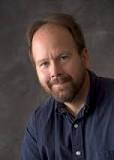 Devin Brown
What enables him to do so? First, he knows his stuff but approaches the subject with admirable humility. “There is a kind of biography,” he notes, “that claims to understand Lewis’s life better than Lewis himself did” (54). Brown hasn’t written one. Second, he tells the story of Lewis’s life from a particular standpoint, that of his spiritual journey. So we have the autobiography of Surprised by Joy with its focus on Lewis’s conversion put into context and then extended to cover the rest of Lewis’s life after he met the Lord. Third, Brown relates the Christian books Lewis was writing at each period to that spiritual journey as the story of his life unfolds. Thus he is able also to give us a literary biography as well without departing from his stated purpose.
Finally, Brown’s approach as described above often yields fresh insights. For example, he notes that Lewis described the death of his mother as a loss of the happy security of his early childhood. The “great continent was gone,” and Lewis was now adrift in a sea of sorrow interrupted only by “islands” of happiness. “All security seemed to be taken from me; there was no solid ground beneath my feet” (45). Brown relates that passage from Surprised by Joy to the floating islands of Perelandra with its prohibition of sleeping on the fixed land. “Lewis would find a different kind of security. This security would not be the kind that put it in his power to command what would happen to him but the kind that required trust. Years after his mother’s death, Lewis would find a way to live with confidence in a world of sea and islands” (46). I must confess I had never connected those passages. I’m glad that now I have.
Too much of Lewis scholarship is just people paraphrasing Lewis’s brilliant language into their own mediocre prose. My usual reaction to it is that people would better spend their time reading Lewis instead. I am always delighted to discover an exception to that rule. Whether this is your first biography of Lewis or your nth, Devin Brown’s A Life Observed is that rare work of Lewis scholarship that is actually worth reading.
Donald T. Williams, PhD, is Professor Emeritus at Toccoa Falls College. He is the author of thirteen books, including Inklings of Reality: Essays toward a Christian Philosophy of Letters (Lantern Hollow Press, 2012), Deeper Magic: The Theology behind the Writings of C. S. Lewis (Square Halo Books, 2016), and An Encouraging Thought: The Christian Worldview in the Writings of J. R. R. Tolkien (Cambridge, OH: Christian Publishing House, 2018).
Related