It is St. Valentine’s Day, the day when we celebrate romantic love, or, if you prefer, National Chocolate and Flowers Discount Day Eve.
Love is a many-splendored thing. Romantic love is related to other loves such as friendship, affection, and even divine love in complicated ways. I have known love but cannot claim to understand it. I shall not presume to comment on it, but instead will simply share a series of profound observations about love from wiser thinkers and greater lovers than I. Perhaps like me you will find something inspiring there, maybe even something to love.
“There is much to be known,” said Adaon, “and above all much to be loved, be it the turn of the seasons of the shape of a river pebble. Indeed, the more we find to love, the more we add to the measure of our hearts” (Alexander, The Book of Three, 31-2).
And through the garden of the world I rove, / Enamoured of its leaves in measure solely / As God the Gardener nurtures them above. (Dante, Paradiso xxvi.64-6)
In that abyss I saw how love held bound / Into one volume all the leaves whose flight / Is scattered through the universe around. (Dante, Paradiso xxxiii.85-7)
 Dante
DanteAt that moment, and what I say is true, the vital spirit, the one that dwells in the most secret chamber of the heart, began to tremble so violently that even the least pulses of my body were strangely affected; and trembling, it spoke these words: “Here is a god stronger than I, who shall come to rule over me.” At that point he animal spirit, the one abiding in the high chamber to which all the senses bring their perceptions, was stricken with amazement, and speaking directly to the spirits of sight, said these words: “Now your bliss has appeared.” . . . From that time on Love governed my soul. (Dante, Vita Nuova II)
” . . . Love’s will, which commanded me according to the counsel of reason” (Dante, Vita Nuova IV).
Whenever and wherever she appeared, in anticipation of her marvelous greeting, I held no man my enemy, and there burned within me a flame that consumed all past offences; and during this time if anyone had asked me about anything, my answer, with face free of all pride, could only have been “Love.” (Dante, Vita Nuova XI).
“‘Lord of all virtues, why do your weep?’ And he said to me: ‘I am like the centre of a circle, equidistant from all points on the circumference, but you are not'” (Dante, Vita Nuova XII).
Then I said to them, “Ladies, the end and aim of my love formerly lay in the greeting of this lady to whom you are perhaps referring, and in this greeting dwelt my bliss which was the end of all my desires. But since it pleased her to deny it to me, my lord, Love, through his grace, has placed all my bliss in something that cannot fail me.” . . . The lady who had first addressed me spoke to me again, saying: “We beg you to tell us wherein this bliss of yours now lies.” And I answered her by saying, “In those words that praise my lady” (Dante, Vita Nuova XVIII).
 Edmund Spenser
Most glorious Lord of Lyfe, that on this day
Didst make thy triumph over death and sin,
And, having harrowed hell, didst bring away
Captiuity thence captiue vs to win:
This glorious day, deare Lord, with ioy begin,
And grant that we for whom thou diddest dye,
Being with thy deare blood clene washt from sin,
May liue for euer in felicity.
And that thy loue we weighing worthily,
May likewise loue thee for the same againe,
And for thy sake that all lyke deare didst buy,
With loue may one another entertayne.
So let us loue, deare loue, lyke as we ought;
Love is the lesson which the Lord vs taught. (Spenser, Amoretti LXVIII)
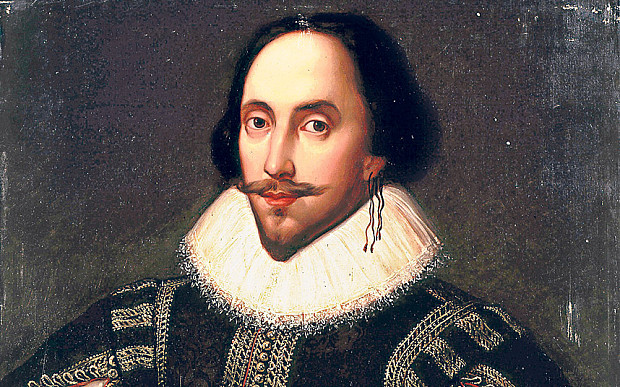 William Shakespeare
Let me not to the marriage of true minds
Admit impediments. Love is not love
Which alters when it alteration finds
Or bends with the remover to remove.
Oh no! It is an ever fixed mark
That looks on tempests and is never shaken.
It is the star to every wandering bark
Whose worth’s unknown, although his height be taken.
Love’s not Time’s fool, though rosy lips and cheeks
Within his bending sickle’s compass come.
Love alters not with his brief hours and weeks,
But bears it out even to the edge of doom.
If this be error and upon me proved,
I never writ nor no man ever loved. (Shakespeare, Sonnet 116)
Donald T. Williams, PhD, is Professor Emeritus at Toccoa Falls College. A border dweller, he stays permanently camped out on the borders between serious scholarship and pastoral ministry, theology and literature, Narnia and Middle-Earth. He is the author of thirteen books, including Ninety-Five Theses for a New Reformation: A Road Map for Post-Evangelical Christianity (Semper Reformanda Publications, 2021).
Related