THE LUCAN GREAT COMMISSION
Luke 24:44-48
A sermon preached at the General Assembly, the Reformed Presbyterian Church of Uganda, Kampala, June 28, 2017, and at University Church, Athens, GA, 3/10/24.
INTRODUCTION: We finish our long series on the Gospel according to Luke by watching him shift his focus from the ministry of Christ to the mission of the church, in anticipation of Luke volume 2, the Book of Acts. You know the mission of the church very well: It is the Great Commission of Matthew 28. It is to go into all the world and make disciples of every nation. So I would like to begin by reminding you briefly of things that should be obvious from reading that version of the Commission, things I am sure you have heard before. Then I will try to give you a fresh perspective on the Great Commission by examining the other passage in which it was given, the same Commission but in different words: Luke 24.
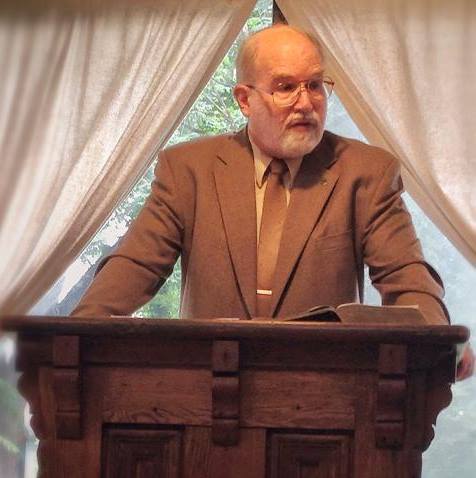 Dr. Williams Preaching at University Church
First, what should be obvious: The Great Commission is to make disciples. There is only one imperative verb, one commanding verb, in the Matthew passage, and it is not to go; it is to make disciples. It would be better translated, “As you are going into all the earth, make disciples of every nation.” We have to “go” in order to reach every nation, but going is not our Commission. We have not fulfilled it by going but by making disciples when we get there. And it is not to make converts. It is to make disciples. We have to make converts in order to make disciples, but the Commission is not fulfilled until we have made those converts into disciples of Jesus. And what is a disciple? It is a learner. It is someone who follows his Master, confesses him before men in Baptism, and wants to learn and to follow all things whatsoever that Master has taught us. Making a convert is simply the first step in what we were sent to do: make disciples. Now let us look at the other time when Jesus commissioned his disciples. It will confirm what we should have seen in Matthew: that the Great Commission is about the Gospel, and the Gospel is about Jesus. It is found in Luke’s conclusion to his Gospel, Luke 24:44-48. It sums up the forty days of grad school, as it were, that Jesus conducted with His disciples after the Resurrection.
Luke 24:44 Now he said to them, “These are my words which I spoke to you while I was still with you, that all things which are written about me in the Law of Moses and the Prophets and the Psalms must be fulfilled.” 45 Then he opened their minds to understand the Scriptures. 46 And he said to them, “Thus it is written that the Christ should suffer and rise from the dead the third day, 47 and that repentance for forgiveness of sins should be proclaimed in his name to all the nations, beginning from Jerusalem. 48 You are witnesses of these things.”
So central is The Great Commission to the life of the Church that our Lord gave it more than once. The version in Matthew 28 is more familiar: But we also have much to learn from Luke’s version. The two passages go together, and both are essential to understand our purpose in this world until our Lord returns. Both passages make Evangelism—taking the Gospel, the Good News of what God has done in Christ for our salvation, to all nations—central to that purpose.
In the case of Luke’s version, we note that it was given at the end of the forty days Jesus spent with his disciples between the Resurrection and his Ascension, “opening their minds to understand the Scriptures.” At the climax of that time, like all good teachers, He was summing up the central points He did not want His disciples to miss. That makes this summary of the Gospel, the very core of our Lord’s own teaching, especially crucial for us. We can learn from it something about the Foundation of the Gospel, the Facts of the Gospel, the Fruit of the Gospel, and the Function of the Evangelist.
- THE FOUNDATION OF THE GOSPEL (vss. 44-46a)
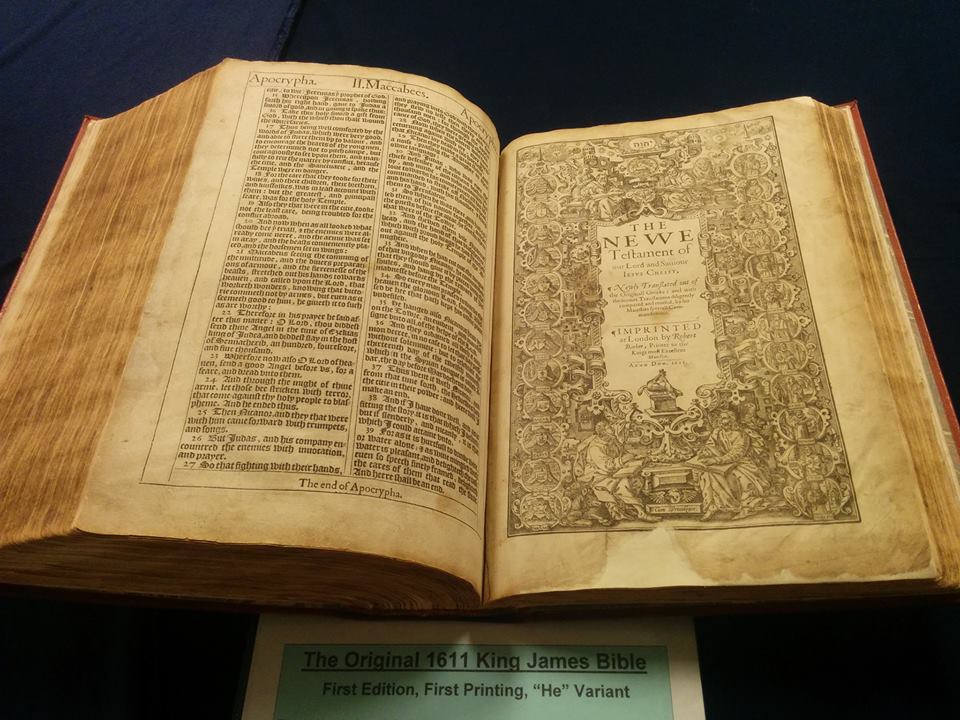
The first thing we note is the foundation of the Gospel, which is the Word of God. “Now he said to them, ‘These are my words which I spoke to you while I was still with you, that all things which are written about me in the Law of Moses and the Prophets and the Psalms must be fulfilled.’ Then he opened their minds to understand the Scriptures. And he said to them, ‘Thus it is written’ . . .” (Luke 24:44-46a).
“Thus it is written.” Our message, in other words, is not our own; it is based on the Word of God. Thus the Gospel that we preach does not begin with “I think,” or “I suppose,” or even “I feel.” It begins with “Thus is it written.” That is the foundation of the Gospel. And that is why we must proclaim it.
This feature of the Gospel helps explain why Christianity is of necessity an evangelizing religion. It explains why we cannot leave people alone, why we cannot just accept that they are different, respect their culture and their beliefs, and mind our own business. For, you see, every other religion is the product of man’s search for meaning. As such, they can afford to dialogue with each other, share their results as equals, take an academic interest in one another’s beliefs, and take or leave them as their fancy dictates. There is no sense of urgency, for everyone is still looking. But the Christian faith is not the product of Man’s search for meaning; it is the proclamation of God’s kingship, the planting of His flag on the territory of our souls. Christian faith is not the product of history but the producer of history. The Christian faith did not evolve from my culture; it was announced by my Creator. And therefore my faith is not a progress report on my search for God; it is the successful conclusion of God’s search for me.
We present the Gospel, in other words, as Truth. If it is not truth, it is not worth presenting. What we have to share is not an elevated emotion, it is not another set of pious platitudes, it is not just a noble sentiment. It is truth given to us by God through written revelation. It is a message from God to men with which we have been entrusted as the messengers. And it is a message that comes with the highest authority—not mine, not yours, but God’s. That is why we must proclaim it.
You must understand that this truth revolutionizes our approach to witness and evangelism. That which was lost has been found! The Gospel is like the shot fired into the air by the member of the search party who finds the missing child so that everyone else can converge on that spot. That is the spirit with which we should proclaim it. Now is the day of salvation! God has not left us in darkness.
Good news! Good news! This is not our speculation; it is His speech. He has not left us in darkness. He has spoken. And so I am not sharing “my faith” (as if anyone cared what I thought about such exalted matters). I am sharing God’s truth. This is not arrogant, because it is not my message. I am not telling you that I have figured out what all the sages could not. I am telling you the Good News that God has found us. We should speak with the spirit of excitement and expectancy (as well as humility) appropriate for people in such a position. And our presentation of the Gospel should bring the unsaved into contact with Scripture. It is Scripture, not my religious experiences, that is sharper than any two-edged sword. My “testimony” is only the opportunity for bringing the message of Scripture to bear on unbelievers. For then perhaps Jesus will open their eyes to understand it, as He did for the disciples after the resurrection and as He has done for us since. And then—and only then—will they hear and believe and be saved.
II. THE FACTS OF THE GOSPEL (vs. 46)
Next we come to the facts of the Gospel. “Thus it is written that the Christ should suffer and rise from the dead the third day, and that repentance for forgiveness of sins should be proclaimed in his name to all the nations, beginning from Jerusalem.” Thus it is written: that is how the Gospel begins, that is its foundation. And its content, the structure built on that foundation, is that the Christ should suffer and be raised again so that repentance for forgiveness of sins can be proclaimed in His name. The message is from God; the salvation is from God. God has spoken; He is not silent. God has acted; He is not unmoved by our plight. The Christian Gospel is unique among the religious messages of the world in that its focus is not what we must to do but what God has done: not what we must do to find God, but what God has done to find us.
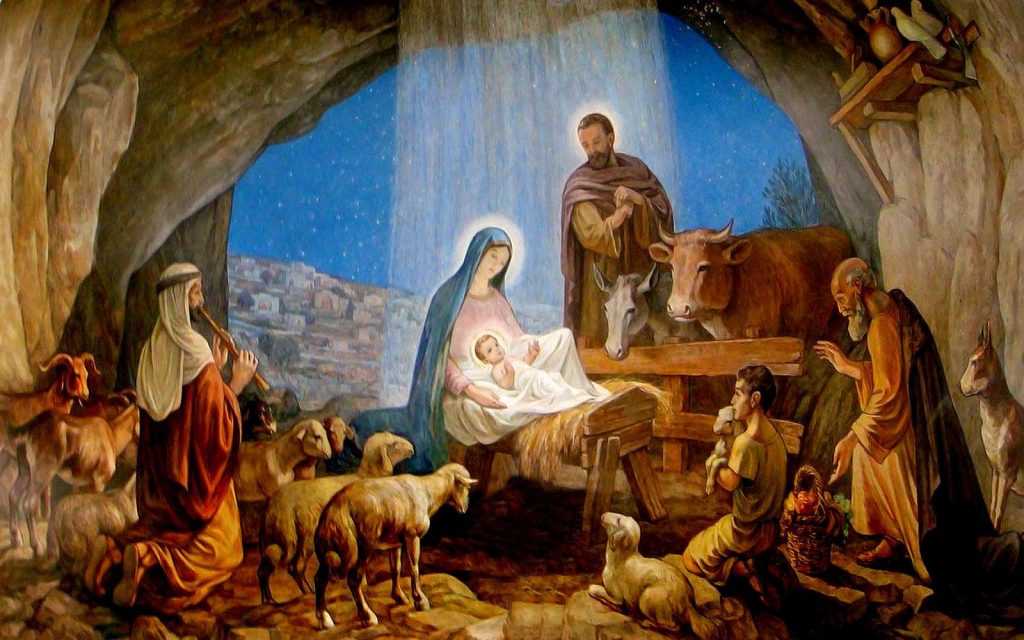
And what has he done? “ . . . that the Christ . . .” The first thing he has done is to come to us Himself in his Son. “For the Word became flesh and dwelt among us, and we beheld his glory, glory as of the only begotten of the Father” (John 1:14). “No man has seen God at any time. But the only begotten God who is in the bosom of the Father, he hath declared him” (John 1:18). And this One was the Way, the Truth, and the Life, and no one comes to the Father but by him (John 14:6). And therefore, let all the house of Israel know for certain that God has made him both Lord and Christ, this Jesus whom we crucified (Acts 2:36). And all this he proved by raising him from the dead. The Gospel is first of all the Good News that God has sent his Son. Good news! Good news! This is the Gospel! This is good news indeed.
But then what follows? “ . . . that the Christ should suffer . . .” No wonder it took Jesus forty days to open the minds of his disciples to understand all that was written about him in the Old Testament, for this is the very theme of that book. From the sacrificial system to the Day of Passover to the Day of Atonement to the Suffering Servant passage in Isaiah, the whole Old-Testament dispensation was a preparation for this suffering. For without the shedding of blood there is no remission for sin. Why were Adam and Eve not immediately destroyed when they disobeyed God? Because the Christ would suffer. Why were animals slain to replace the fig leaves Adam and Eve had futilely woven to cover their shame? Because the Christ would suffer. Why the blood of all those bulls and goats on every Jewish altar for thousands of years? Because the Christ would suffer. Why the call of Abraham? So the Christ could come and therefore suffer. Why the sacrifice of Isaac? Because the Christ would suffer. Why the preservation of a remnant and their return to the Land? Because the Christ would suffer.
And why did he have to suffer? Because “God commendeth his love toward us in this, that while we were yet sinners, Christ died for us” (Rom. 5:8). He was the Lamb of God who took away the sins of the world. Sin is so evil that nothing less than this death, nothing less than His death, could have atoned for it. But He has paid all the price of it forever! And therefore “if we confess our sins, God is faithful and just to forgive us our sins and cleanse us of all unrighteousness” (1 John 19). “For God so loved the world that he gave his only begotten Son, that whosoever believeth on him should not perish, but have eternal life” (John 3:16). All because the Christ should suffer. Good news! Good news! This is the Gospel! This is good news indeed.
But that is not all. “. . . that the Christ should suffer and rise from the dead the third day.” The resurrection is God’s way of saying that the sacrifice of his Son for sin has been accepted. It is God’s warrant to us that Satan has been defeated and the debt of sin cancelled for believers forever. But even better than that (if anything could be), it means that our Lord who loved us even unto death is given back to us alive. He lives now to impart the life that is beyond death, to be our living King, and to bring us to glory with him. Good news! Good news! This is the Gospel! This is good news indeed.
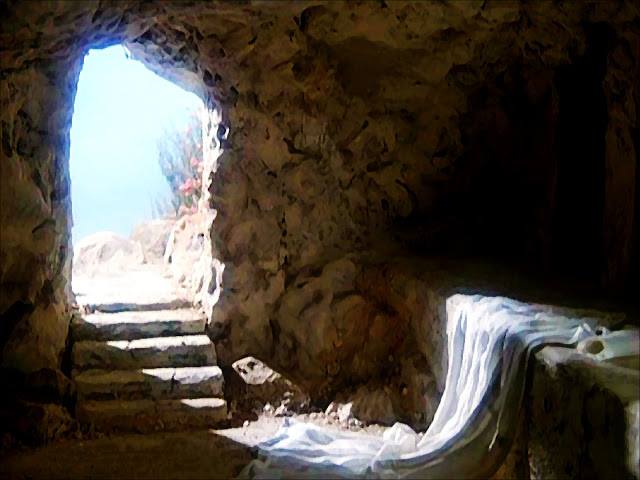
And what follows from that? The proclamation of repentance. “. . . that repentance for forgiveness of sins should be proclaimed in his name to all the nations, beginning from Jerusalem” (vs. 47). Do you see the beauty of the logic of the Gospel? Why does this come right after the resurrection? Because the resurrection of Christ is what gives repentance its point. Before Christ suffered, what good would it do to repent? You could promise not to sin anymore, but you would not be able to keep the promise, and even if you could, you would still be guilty of your former sin and thus still worthy of death. But now that Christ has suffered, you can be forgiven. So now repentance is no longer futile; now it can lead to a restored relationship with God, to forgiveness, to salvation, to eternal life. And now that He has been raised from the dead, there is another way, repentance becomes worth doing. Because now the power of the risen Lord is unleashed through his Holy Spirit, so that we have help in following through on our repentance. And we have the promise made more sure that, because He lives, so shall we.
So the suffering and resurrection of Christ leads to repentance. And repentance means changing your mind, laying down the arms of your rebellion against God, believing in Christ as your savior, and turning from sin to follow him. Does that mean you must stop sinning to be saved? Not exactly. It would be more accurate to say that you are saved to stop sinning. Salvation is God’s work, not ours; your forgiveness is based on Christ’s sacrifice, not on your success at reforming yourself. Salvation is through faith in Christ’s work, not through the success of your own. To say that salvation is not by works is to say that it does not depend on your works but on Christ’s work, not on your acceptability but on Christ’s. But we must turn to Him in faith to receive the free gift of salvation, and turning to Him means turning away from sin. You will no doubt still stumble and even fall from time to time. But you must truly turn to Him. And that turning is repentance.
Do you understand? Because Christ suffered, because Christ rose, repentance can be proclaimed and sins forgiven. Your sins. And mine. Good news! Good news! This is the Gospel! This is good news indeed.
III. THE FRUITS OF THE GOSPEL (vs. 47)
The foundation of the Gospel (the Word of God); the facts of the Gospel (that the Christ should suffer); they lead to the fruit of the Gospel. Because the Christ has suffered and been raised, “repentance for the forgiveness of sins” is proclaimed in His name to all who believe. Forgiveness of sin means the thing that has separated us from God is taken out of the way and we are restored to our position as sons and daughters of the Father. And that gives us love, joy, peace, eternal life, and a purpose for living great enough to make eternal life desirable. And all of that starts with forgiveness.
 The Prodigal Son is Forgiven
It astounds me how shy we are of talking about this word, so central to every New Testament summary of the Gospel as it is. But in order to talk about forgiveness, we must talk about sin. And we are afraid that if we talk about sin we will be seen as judgmental. But if we don’t, we must try to preach the Gospel without talking about the central need we all have as fallen human beings. Forgiveness! To have a conscience that is really clean—not just seared or asleep, but really free from guilt. To know that you are as acceptable to God as Jesus Christ is. To have no need to be ashamed. To receive this, not because you deserve it, but because God loves you and has paid for your sin forever in the death of Christ. Maybe the most important thing we can do today is to recover the joy of forgiveness. That means first recovering a sense of the sinfulness of sin. We cannot communicate this to others until first we have felt it ourselves. Then we will be filled with such joy that we will not need to motivate ourselves—indeed, we will not be able to restrain ourselves from proclaiming repentance for forgiveness in his name. Good news! Good news! This is the Gospel! This is good news indeed.
IV. THE FUNCTION OF THE EVANGELIST (vss. 48-49)
The foundation, the facts, and the fruit of the Gospel lead to the function of the evangelist. “Repentance for forgiveness of sins should be proclaimed in his name to all the nations, beginning from Jerusalem. You are witnesses of these things.” If this is the great Gospel we have been given, what then are we to do with it? The actual function of taking the Gospel to the nations is carried by two words in this passage. First, repentance for forgiveness in Jesus’ name is to be proclaimed. This verb captures the public side of evangelism. We have a message to deliver. We are not talking about ourselves; we are proclaiming what God has done. If we lose this spirit, we lose something essential to the spread of the Good News.
But that is not the only side of it. We are also referred to as witnesses of these things. A witness is someone who is able to speak with first-hand authority. He is someone who has seen something with his own eyes. Let’s say I hear a loud bang and look up to see that two cars have collided. I saw what happened, but because I was not paying attention I did not see how or why it happened. So if I am called as a witness to determine which driver was at fault, I will be useless, and my testimony will be disallowed. I did not see it. My speculation is of no interest to the court, and my testimony only hearsay. I am dismissed.
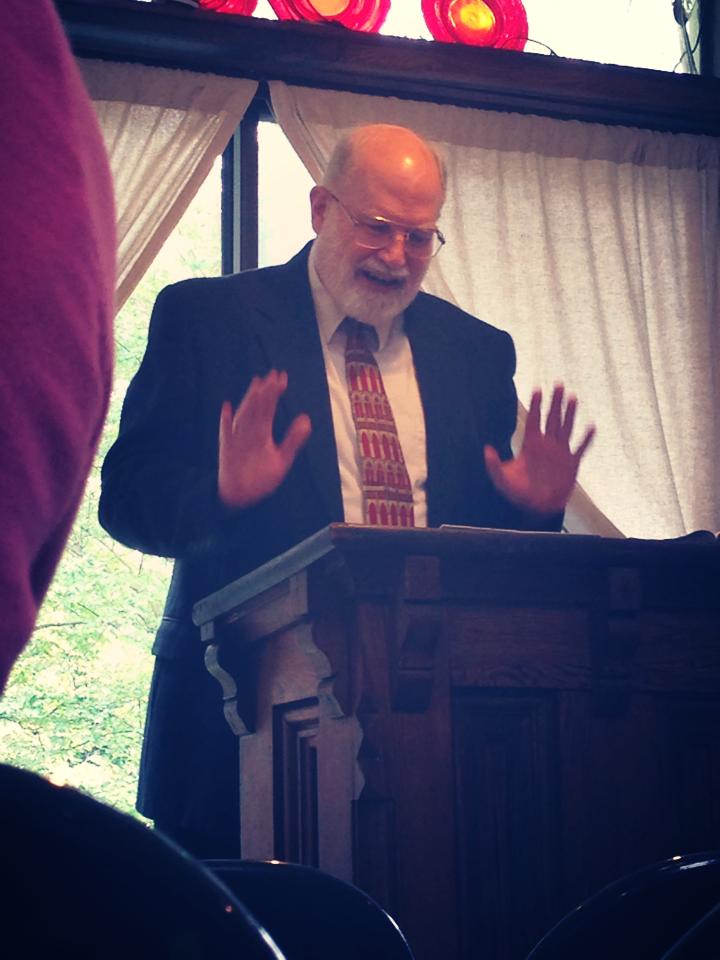 Dr. Williams Testifying and Proclaiming
Now, the disciples were literal eye witnesses to the resurrection, people whose testimony is very important indeed. We cannot equal them in that, but our testimony is also relevant. For we can give personal testimony to the ongoing reality of the resurrection, experienced in the saving power of the blood of Christ. And that is what we are called to do. Proclamation is the public side of evangelism, and witness is the private, or better, the personal side. Evangelism is effective when the two are combined, that is, when we are heralds to the Good News (like we said under the Foundation of the Gospel) who can add the clear and firm testimony of our own eyes, our own life experience, that the news we proclaim is true and real and powerful for salvation—because it has saved us. But of course, to give that testimony, we must first have experienced and be experiencing these things.
Therefore, the first step to effective witness is to take the Gospel seriously ourselves. When Ghandi was asked why, as a student of Christ, he had not become a Christian, he replied, “If Christ has done such a poor job of saving you, why should I ask him to save me?” Ouch! What a tragic indictment this is, when the Gospel is the power of God to salvation for those who believe. The first step to effective witness is to be transformed by the Gospel ourselves.
And what a Gospel it is! Thus it is written that the Christ should suffer and rise from the dead the third day, and that repentance for forgiveness of sins should be proclaimed in his name to all the nations. You are witnesses of these things. Good news! Good news! This is the Gospel! This is good news indeed.
CONCLUSION: So let me ask you some key questions today as members of University Church. Has Christ opened your mind to understand the Scriptures? Do you see that thus it was written, that he should suffer and rise from the dead? Have you repented and believed in Him for the forgiveness of your sins? Have you confessed with our mouth Jesus as Lord and believed in your heart that God has raised him from the dead? Are you ready to proclaim that Good News and be a witness to its saving power? I hope and trust that you are. May God grant that it may be so, more fully and practically so than ever before to the glory of His Son Jesus Christ!
Here endeth the Lesson.
Donald T. Williams, PhD, is Professor Emeritus of Toccoa Falls College, an ordained minister in the Evangelical Free Church of America, and a member of University Church, Athens, GA. A border dweller, he stays permanently camped out on the borders between serious scholarship and pastoral ministry, theology and literature, Narnia and Middle-Earth. He is the author of fourteen books, including Ninety-Five Theses for a New Reformation: A Road Map for Post-Evangelical Christianity (Toccoa: Semper Reformanda Publications, 2021) and Answers from Aslan: The Enduring Apologetics of C. S. Lewis (Tampa: DeWard, 2023).
Related