THE FAITHFUL STEWARD, or REASONS FOR READINESS
Luke 12:35-48
A sermon preached at University Church, Athens, GA., 5/30/21
Luke 12:35 “Be dressed in readiness and keep you lamps alight. 36 And be like men who are waiting for their master when he returns from the wedding feast, so that they may immediately open the door to him when he comes and knocks. 37 Blessed are those slaves whom the master shall find on the alert when he comes. Truly I say to you that he will gird himself to serve, and have them recline at table, and will come up and wait on them. 38 Whether he comes in the second watch, or even in the third, and finds them so, blessed are those slaves. 39 And be sure of this, that if the head of the house had known at what hour the thief was coming, he would not have allowed his house to be broken into. 40 You too, be ready, for the Son of Man is coming at an hour that you do not expect.”
41 And Peter said, “Lord, are you addressing this parable to us, or to everyone else as well?” 42 And the Lord said, “Who then is that faithful and sensible steward whom his master will put in charge of his servants to give them their ration at the proper time? 43 Blessed is that slave whom that master finds so doing when he comes. 44 Truly I say to you, he will put him in charge of all his possessions. 45 But if that slave says in his heart, ‘My master will be a long time in coming,’ and begins to beat the slaves, both men and women, and to eat and drink and get drunk, 46 the master of that slave will come on a day when the slave does not expect him, and at an hour he does not know, and will cut him in pieces and assign him a place with the unbelievers. 47 And that slave who knew his master’s will and did not get ready or act in accord with his will shall receive many lashes, 48 but the one who did not know it and committed deeds worthy of a flogging will receive but few. And from everyone who has been given much shall be required; and to whom they entrusted much, of him they will ask all the more.”
INTRODUCTION: When last we looked at Luke’s Gospel together back in March, we saw the concept of stewardship in the parable of the farmer who built bigger barns because he did not realize that his wealth was a gift held in trust from God to be used for Him. For a Steward is a servant who manages the wealth of another for the benefit of the Master. Now Jesus gives us some insight on how to be a good Steward in the light of the fact that we pursue that calling while waiting for the Second Coming. “Be ready, for the Son of Man is coming at an hour that you do not expect.”
In a passage of great earnestness, Peter writes this in his second Epistle: “Know this first of all, that in the last days mockers will come with their mocking, following after their own lusts and saying, ‘Where is the promise of His coming? For ever since the fathers fell asleep, all continues just as it was from the beginning of creation. . . . But do not let this escape your notice, beloved, that with the Lord one day is as a thousand years, and a thousand years as one day. The Lord is not slow about His promises as some count slowness, but is patient toward you, not wishing for any to perish but all to come to repentance. But the day of the Lord will come like a thief, in which the heavens will pass away with a roar, and the elements will be destroyed with intense heat, and the earth and its works will be burned up. Since all these things are to be destroyed in this way, what sort of people ought you to be in holy conduct and godliness?” (2 Pet. 3:2-3, 8-11).
Peter writes this way because of the instruction he got from the Lord here in Luke 12, the passage that is before us today. If in the First Century people were becoming cynical about the Lord’s return, surely we are even more susceptible to the argument they were making, with another two thousand years of business as usual continuing just as it has since the creation. Jesus and Peter both foresaw that we would find it hard to maintain a sense of urgency about the Lord’s work that flows from expectancy about His coming. We are like I was my first year in seminary, when I had a job as caretaker for a mansion on Chicago’s North Shore of Lake Michigan. I got a room in the house and salary for looking after the place. Well, my bosses the Solovys went on a trip to Europe for two weeks and left me in charge. I had the run of their mansion for the duration. And here’s the thing: I knew the day and hour of their return, because I had to take their Lincoln Continental and pick them up at O’Hare when they got back.

I knew the day and hour of the master’s return. So what did I do? I spent two weeks swimming in their pool and listening to their expensive stereo and playing another kind of pool in their billiards room when I wasn’t studying. And then the last day I spent in a flurry of activity doing all the chores I was supposed to have been keeping up with every day. You can all see the point already. If I had not known the day and hour of the master’s return, I would have had to approach those two weeks very differently. So, when it comes to the Lord’s work, which way are we living? I just quit preaching and went to meddling, didn’t I? Sorry. Jesus beat me to it. He gives us three reasons here why we need to be ready all the time: a command to stay ready, the conditions under which that command must be obeyed, and the consequences of obedience or disobedience.
- THE COMMAND (v. 35-6)
The first reason we need to be always faithful and always ready for the Master’s return is that Jesus has commanded it. “Be dressed in readiness and keep you lamps alight. And be like men who are waiting for their master when he returns from the wedding feast, so that they may immediately open the door to him when he comes and knocks” (v. 35-6). That should be a sufficient reason in itself for those who love Him. “If you love me,” He said elsewhere, “keep my commandments” (John 14:15).
What is He commanding? Action! To be about His business. What the NASB translates as “Be dressed in readiness” is the old familiar “gird up your loins” of the KJV. Modern men don’t relate to that imagery very well because we don’t typically wear long flowing robes anymore. A literal modern equivalent might be something like “Put on your athletic supporter,” or, maybe a little less graphically, “roll up your sleeves” is probably what we would say in a similar context.

I remember as a kid hearing a sermon on a parallel passage with a similar idea, Mark 13:37, which in the KJV is “What I say unto thee I say unto all: Watch!” I took it rather literally. That afternoon I went home and got out my telescope and sat in the back yard scanning the sky, watching for Jesus to come back. You can’t see much besides blue sky in the middle of the day, which gets a wee bit boring after the first five minutes, so by the time my Mom called me in for supper I was starting to wonder if I had the right idea. I didn’t.
The idea of watching is not scanning the horizon but rather staying on the alert, not going to sleep at your post, being always on the lookout for opportunities to share the Gospel or advance the Kingdom in other ways. Instead, do you ever find yourself muddling through the day just trying to make ends meet and survive while being spiritually half asleep? That’s what the passage of time that Peter spoke of can do to you. So we need to be reminded periodically of the Lord’s command: Gird up your loins; roll up your sleeves; stay spiritually involved; be on the lookout; watch!
- THE CONDITIONS
The first reason for readiness is the Lord’s command. The second reason for readiness is the conditions under which we serve, the circumstances in which we obey it. The Lord is coming back, and we don’t know when. We can’t predict it, so we have to be ready all the time and can’t take the approach I took at the Solovys’ mansion. This unpredictability is emphasized three times in this short little passage. It might be in the middle of the night. “Whether he comes in the second watch, or even in the third, and finds them so, blessed are those slaves” (vs. 38). The Romans divided the night into four “watches,” so the second and third would be the ones when the temptation to drowsiness would be at its peak for anyone on duty. One thing is certain: Jesus’ coming definitely will not be when you figure it will. “You too, be ready, for the Son of Man is coming at an hour that you do not expect” (v. 40). And this unpredictability is stressed yet again in verse 46. The master of that slave will come on a day when the slave does not expect him, and at an hour he does not know, and will cut him in pieces and assign him a place with the unbelievers.”
What are the implications of these conditions of unpredictability? Surely one is that date-setting is totally ruled out. As if Matthew 24:36 were not enough! “But of that day and hour no one knows, not even the angels of heaven, nor the Son, but the Father alone.” In case you missed it there, this passage should pretty much nail it down. You absolutely cannot figure it out. So stop trying! And don’t listen to anyone who still does try. It’s not your job to figure out when the Lord is coming. It’s your job to be faithful, to occupy until He does.
Second, we need to be faithful in the light of our inability to figure out the timing of the Second Coming. That means we have to live in such a way that we cover the bases either way. What if it is really soon? What if it won’t be for another thousand years? Our life should be such that we are prepared for both scenarios because they are both possible.
OK, what if it is really soon? We are to live as if it could be at any moment. I don’t think our preachers have done a great job of preparing us for that possibility. I don’t know how many times I’ve been warned against whatever the sin du jour was of the sermon in question, “What if Jesus came back and found you doing that?” I suppose that would be pretty embarrassing, but the proper exhortation if you want me to flee that sin would be to remind me that He can see me doing it already, right now. Omniscience was an attribute of God last time I checked. Jesus’ point is rather positive: Be found at your post! Never desert it! And realize that, whenever the Return might be, the amount of time we have to serve the Lord who bought us is finite. Even if the Second Coming is long delayed, your personal moment to see the Lord face to face could literally be at any moment. So what do you need to be doing? What are you putting off? To break a bad habit? To apologize to your brother? To start reading your Bible on a less haphazard basis? To tell someone that you love him? To witness to your neighbor? To pay back a debt? Get on with it! Do it now. Do not put it off. Based on both the doctrine of the Second Coming and the reality of the brevity of life, for all you know this might be the last day you have to get it done. This doesn’t mean you live constantly stressed out and under the gun. But even if you live to be a hundred and the Lord tarries, life is short. Believe me, it did not take me seventy years to become seventy years old! At least, that’s not how it feels. The last half of that period especially happened in a day. Your moments are finite. Make them count!
On the other hand, what if it’s going to be a long time? We need to live so we’ve got that base covered too. We take care of the environment. We plan for the future in case we are here to live in it, and in case our children and grandchildren are going to live in it. We plant trees even if we won’t be around to enjoy their shade when they are big enough to cast it. We make every day count, both for the present and the future. We don’t know when the burglar is coming, so we lock our door every night. We don’t know when the pop quiz is coming (my students know it will be in an hour when they think not!), so we study every night. We don’t know when the inspection is coming, so we are always at our post. We do this because we are commanded to and because the conditions under which we serve require it of us.
- THE CONSEQUENCES
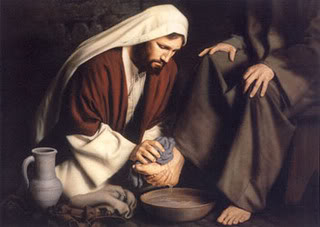
OK, we are ready because we were commanded to be and because of the conditions in which we live. The third reason for readiness may be the best of all. There are consequences: great reward for faithfulness, and judgment for unfaithfulness. Verse 37 may be one of the most astounding verses in the Bible. Jesus will do what hardly any earthly master, however kind and benevolent, would ever think of doing. He will sit his faithful servants down at the table and wait on them Himself. “Blessed are those slaves whom the master shall find on the alert when he comes. Truly I say to you that he will gird himself to serve, and have them recline at table, and will come up and wait on them” (vs. 37). It was unheard of for a master to do what Jesus says He will do for His servants who are found faithful. It foreshadows the radical act when He would wash the disciples’ feet before the Last Supper. His love will be shown to us in ways so extravagant we will not know how to handle it! And it would be enough were He just to say, “Well done, thou good and faithful servant. Enter into the joy of your Master.”
The consequences of unpreparedness are judgment. It is possible to find yourself in verses 45-47. “But if that slave says in his heart, ‘My master will be a long time in coming,’ and begins to beat the slaves, both men and women, and to eat and drink and get drunk, the master of that slave will come on a day when the slave does not expect him, and at an hour he does not know, and will cut him in pieces and assign him a place with the unbelievers.” This is one who was thought to be a servant of the Master, but who ends up with the unbelievers. The best way to be unprepared is to be an unbeliever. The second-best way is to be a merely professing believer. You’re not going to Hell because you occasionally get distracted by the cares of this life. We’ve all nodded off on our watch at one time or another. But this passage gives us a useful way to examine ourselves, whether we be in the faith. Is your faith genuine faith? Well, how does this passage inspire you to respond to the idea of the Second Coming? Does the reminder that Christ is coming back and you don’t know when inspire you to serve the Lord even more faithfully, or does it inspire you to say, “My master will be a long time in coming,” and to therefore live for yourself? That is the bottom line. People who do not relate properly to the Second Coming probably are not related properly to the First Coming either. How we relate to the Lord is the common denominator in both.
One little footnote before we close. Verses 47-48 are the basis for the idea that, just as there are degrees of reward in Heaven, so there are degrees of punishment in Hell. “And that slave who knew his master’s will and did not get ready or act in accord with his will shall receive many lashes, but the one who did not know it and committed deeds worthy of a flogging will receive but few.” God will do what is right. There might be some small comfort therefor basically good people who died in their unbelief, though nothing can compensate for not being in Heaven with the Lord. But I’m afraid I’ve got bad news for you. The fact that you have just heard this sermon makes you ineligible for inclusion in the group that did not know the Master’s will. I will be really bummed out if all I have accomplished today is to heighten the severity of your flogging! So avoid stripes altogether by taking Jesus as your Savior and Lord and by joining that group that will receive His table service at the Marriage Supper of the Lamb!
CONCLUSION: I can think of no better way to conclude this message than by returning to Peter’s words, what may indeed be his commentary on this passage as he remembered it, those words we started with. “Know this first of all, that in the last days mockers will come with their mocking, following after their own lusts and saying, ‘Where is the promise of His coming? For ever since the fathers fell asleep, all continues just as it was from the beginning of creation. . . . But do not let this escape your notice, beloved, that with the Lord one day is as a thousand years, and a thousand years as one day. The Lord is not slow about His promises as some count slowness, but is patient toward you, not wishing for any to perish but all to come to repentance. But the day of the Lord will come like a thief, in which the heavens will pass away with a roar, and the elements will be destroyed with intense heat, and the earth and its works will be burned up. Since all these things are to be destroyed in this way, what sort of people ought you to be in holy conduct and godliness?” (2 Pet. 3:2-3, 8-11). What sort of people ought we to be indeed? The sort who are found on the alert when the Master comes. Amen.
Donald T. Williams is Professor Emeritus at Toccoa Falls College. He is the author of thirteen books, including, most recently, Deeper Magic: The Theology Behind the Writings of C. S. Lewis (Baltimore: Square Halo Books, 2016), An Encouraging Thought: The Christian Worldview in the Writings of J. R. R. Tolkien (Cambridge, OH: Christian Publishing House, 2018), The Young Christian’s Survival Guide: Common Questions Young Christians are Asked about God, the Bible, and the Christian Faith Answered (Cambridge, OH: Christian Publishing House, 2019), Stars through the Clouds: The Collected Poetry of Donald T. Williams (Lantern Hollow Press, 2020), and Ninety-Five Theses for a New Reformation: A Road Map for Post-Evangelical Christianity (Semper Reformanda Publications, 2021). (His website is www.donaldtwilliams,com. He blogs at www.thefiveilgrims.com.
Related