INTRODUCTION: When I ask most Christians why they believe the Bible, if they can give any answer at all, it is usually to quote 2 Tim. 3:16, where the Bible claims its own inspiration. But this is a circular argument: “The Bible is true because it says so.” But if we just accepted books as inspired because they claimed to be, we would have to accept the Koran and the Book of Mormon as inspired. How do we justify treating Scripture differently? We need a non-circular way of establishing the trustworthiness of the Bible. It can be done, and it would look something like this.
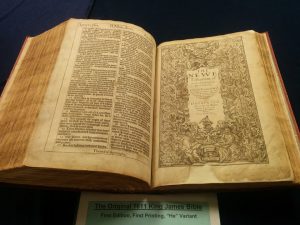
I. The Gospels are historically reliable.
A. Legal and Historical Criteria for Evaluating Testimony
- Proximity to the event (written Gospels within one generation).
- Multiple Attestation (four Evangelists plus Paul, Luke’s sources, and other writers in the Epistles).
- The right Kind of Consistency (i.e., you want testimony that is consistent but not identical—if all witnesses say the exact same thing you suspect they have colluded and have an agenda other than telling simple truth; therefore, you actually want discrepancies, but not contradictions—exactly what the Gospels give us).
- Testimony that is embarrassing to the witness is usually accepted because people tend to change the story to benefit themselves, not otherwise (e.g., disciples present themselves as clueless cowards).
- Testimony from hostile witnesses is accepted because the witness has no motive other than truthfulness for giving it (e.g., Paul and James started off as hostile witnesses but were convinced).
B. Conclusion: The Gospels are pretty reliable historical documents.
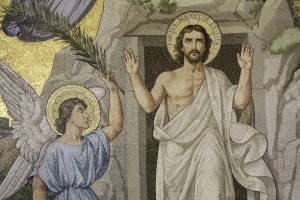
II. Based on the historical evidence, Jesus rose from the dead.
A. Virtually all reputable historians, including secular and skeptical historians, accept and must explain four facts:
- Jesus lived and was crucified by Pilate;
- He was buried in a borrowed tomb;
- Three days later the tomb was empty;
- Almost immediately his followers were claiming that he had risen and that they had seen him.
- B. All secular theories to account for these facts have fatal flaws, e.g.:
- Women went to wrong tomb—the Jews could have produced the body, and Christian movement would have been stillborn.
- Swoon theory—ignores physiology of crucifixion and facts of tomb construction.
- Disciples hallucinated the appearances—group hallucination implausible, and again, the body would be in the tomb for the Jews to produce.
- Disciples stole the body—they were incapable of pulling it off, would know they were lying, so why suffer death and torture rather than admit the truth?
- Resurrection is only theory that actually accounts for the facts.

III. If Jesus rose from the dead, then his claims to be the Son of God must be accepted.
- If Jesus is the Son of God, then what he taught is true.
- Jesus taught that Scripture is true down to its jots and tittles:
- “”Not the smallest letter or stroke shall pass away from the Law until all is fulfilled” (Mat. 5:18).
- “But this has happened that the Scriptures might be fulfilled” (Mark 14:49).
- “The Scripture cannot be broken” (John 10:35b).
IV. Therefore, we accept Scripture as inspired on the authority of Jesus established historically—not just because it claims to be inspired in 2 Tim. 3:16.
It is critically important that Christians understand this argument. Circular reasoning is an inadequate foundation. Other foundation can no man lay than that which is laid: Jesus Himself.
BIBLIOGRAPHY
Packer, J. I. and Thomas C. Oden. One Faith: The Evangelical Consensus. Downers Grove, Il.: InterVarsity Press, 2004. Good source for classic statements of Evangelical doctrine, including the seminal Chicago Statement on Biblical Inerrancy.
Wenham, John W. Christ and the Bible. Downers Grove: InterVarsity Press, 1972. Thorough exposition of our Lord’s teaching on the nature and authority of Scripture shows the foundation of classic Christian teaching on Inspiration and Inerrancy.
Williams, Donald T. The Person and Work of the Holy Spirit. Nashville: Broadman & Holman, 1994; rpt. Wipf and Stock. Full treatment of the classic Evangelical position on the doctrine of Scripture sets Inspiration, Inerrancy, and Illumination in the context of the Holy Spirit’s ultimate mission, to glorify Jesus; a Christocentric Pneumatology.
Make sure to get Dr. Williams’s latest book, Deeper Magic: The Theology Behind the Writings of C. S. Lewis (Baltimore: Square Hollow Books, 2016). Order from the publisher or Amazon!

Related