RENAISSANCE; REFORMATION; REVIVAL
Donald Williams
While the world celebrates Halloween, a much more important remembrance gets easily swept aside: Reformation Day. October 31, 1517, was the day Martin Luther nailed the Ninety-Five Theses to the Wittenberg church door, the official start of the Protestant Reformation.
Do we still need Reformation today? Yes! And more: As I look at the current scene, I see a church in desperate need of three great movements of God:
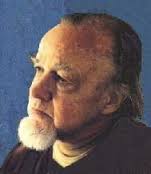 Francis Schaeffer tried to start a new Evangelical Renaissance
Renaissance:
Renaissance is a recovery of the life of the mind. Why is that a need today? An increasingly illiterate generation is harder to reach with a faith founded on the message of a Book; an increasingly illiterate church is incapable of experiencing full-orbed Christianity based on the whole counsel of God revealed in the Text of that Book. Electronic inundation keeps us perpetually distracted. From a cultural (rather than a technological) standpoint, we may well be entering a new Dark Ages. It’s easy to curse the darkness, but what can we do about it? The historic Renaissance might help us to answer that question.
The original rebirth of learning and culture that we call the Renaissance started with a recovery of interest in reading classical literature in the original languages using grammatico-historical exegesis to recover the original message of those books to their original audience. God used that movement, Renaissance Humanism, with its motto of ad fontes, “back to the sources,” to make the Reformation, the recovery of the pristine Gospel of the New Testament, possible. How? The ad fontes tradition made it possible in a new way for Sola Scriptura to be a practical answer to the problem of religious authority that vexed the era. If history repeats itself, a new Renaissance just might lead to a new . . .
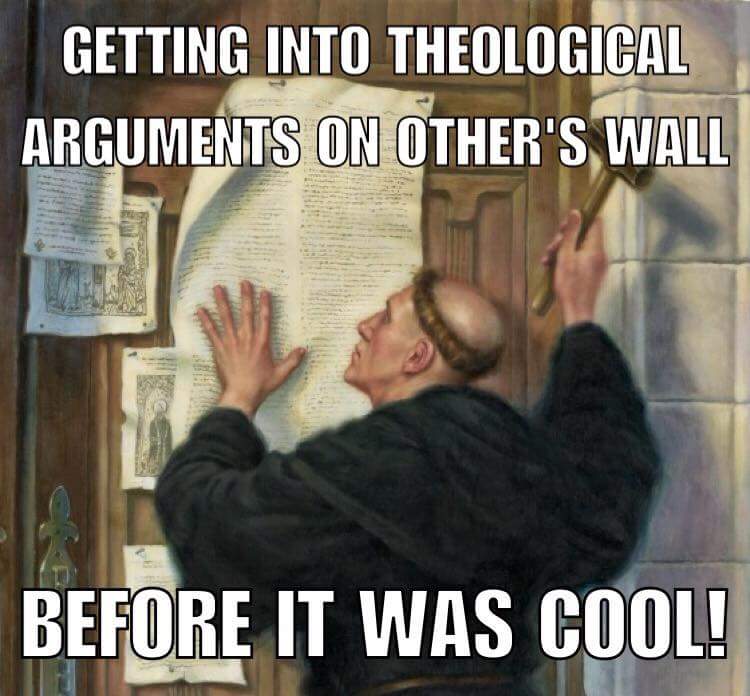 Martin Luther started the historic Reformation
Reformation:
Reformation is a recovery of sound doctrine, especially as it relates to the Gospel itself. When the new learning of the Renaissance, the ad fontes tradition, was applied to Scripture, the original documents were enabled more easily to speak once again with their own voice. This led to a recovery of sound doctrine in five areas: Sola Scriptura, Scripture alone is, not the only authority, but the only infallible and inerrant authority and final court of appeal; Sola Gratia, salvation is by grace, God’s unmerited favor, alone, apart from works; Sola Fide, salvation is received by the empty hands of faith alone, apart from works; Solus Christus, Christ alone is the only Mediator between God and men; Soli Deo Gloria, God’s glory alone is the end of salvation and the purpose of all of life.
All these truths are in danger of being lost again. We therefore need a new Renaissance leading to a new Reformation. Otherwise, we will continue to gorge ourselves on spiritual junk food while the great truths of the faith slip through our fingers. But if God would grant us Renaissance and Reformation again, they just might lead to . . .
 What will the next Evangelical Revival look like?
Revival:
Revival is a recovery of vital spirituality. The great error of our generation is to believe that this recovery is possible apart from the first two. Biblically and historically, it is not. Martin Luther recognized the debt the Reformation owed to the Renaissance: “Whenever God wants to break forth truth anew out of His Word, he prepares the way by the rise of languages and letters, as if they were John the Baptists.” And if Christianity is true, then only the faithful preaching of the pure Gospel of the New Testament, which was recovered by the Reformation, can give us the genuine spirituality and real Christian lives that Revival is all about.
Salvation is by grace alone through faith alone in Christ alone! Without Renaissance and Reformation, all our zeal for Revival is vanity and striving after wind. So do not stop praying and working for Revival. But do start praying and working for the Renaissance and Reformation without which no true revival with lasting impact is possible.
I am here to sound the call for these three great movements of God again in our generation and to encourage and support those working for them. Please join me! Ad fontes! Soli Deo gloria!
If you are interested in this call for Renaissance, Reformation, and Revival, you can see all three laid out in greater detail in Dr. Williams’s book Ninety-Five Theses for a New Reformation (Semper Reformanda Publications, 2021).
Related